Mould needs more than a surface clean.
Jirah Restorations assesses and remediates mould in homes, commercial buildings and managed properties across Queensland.
We find how far the contamination goes and what moisture is feeding it, then contain, HEPA-filter, clean and remediate — dealing with the source and the full extent of the problem, not only the mould you can see.
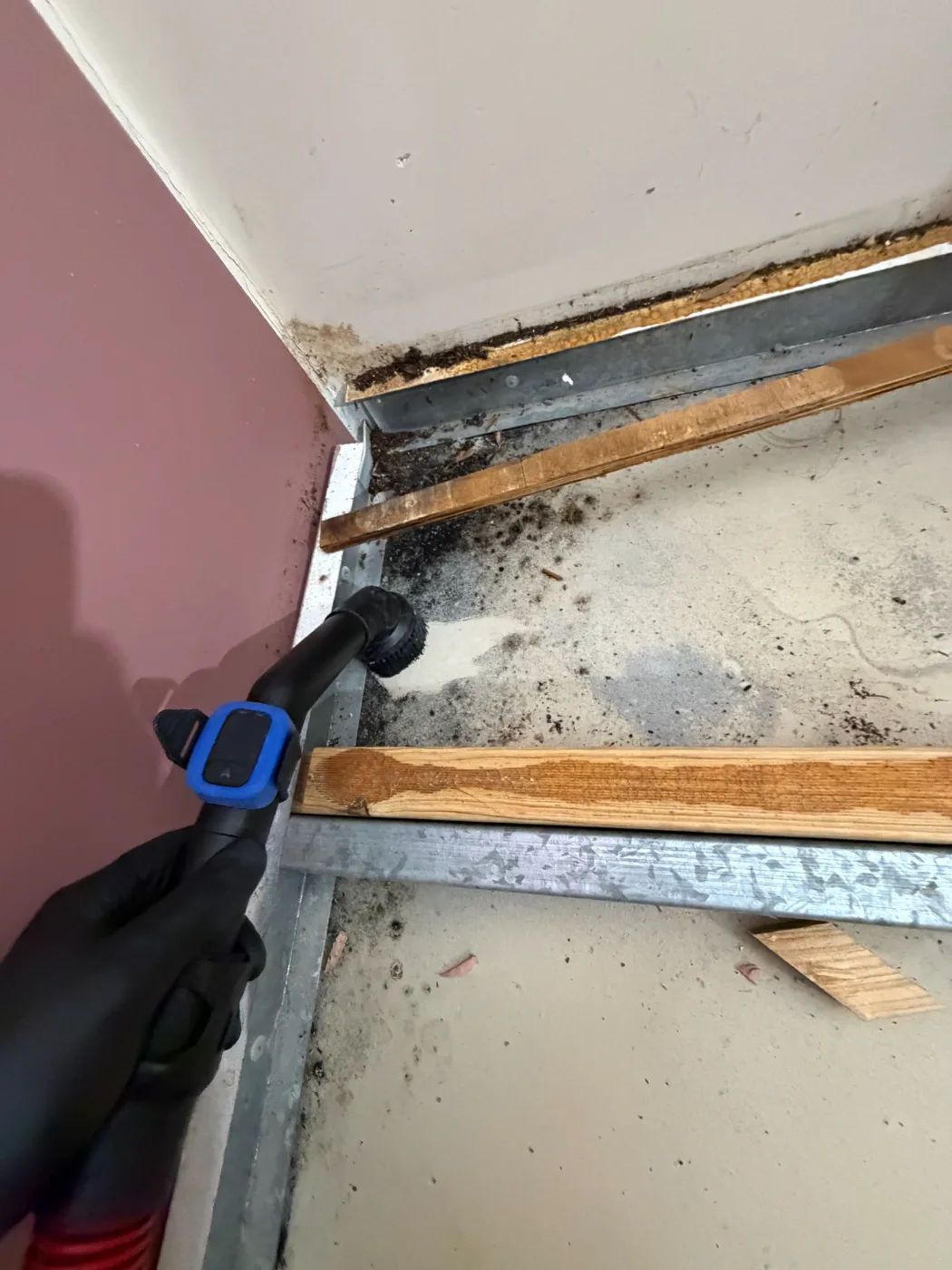
What you can see may only be part of the problem
Mould can develop behind walls, beneath flooring and in other concealed areas after water gets in or moisture hangs around.
Wiping or spraying the mould you can see may not touch the cause. Our approach is built on contamination control, moisture management and remediation done properly.
Our mould remediation services
- 01
Mould assessment
Identifying visible and likely areas of contamination.
- 02
Containment and air filtration
Keeping contamination from spreading while the work is under way.
- 03
Remediation
Removing and cleaning mould-affected materials and surfaces.
- 04
HEPA cleaning
Detailed cleaning to remove settled particulate and contamination.
- 05
Moisture investigation
Finding the moisture conditions behind the growth.
- 06
Documentation and reporting
Photographic records and documentation of the work completed.
Our process
Assess
We identify the extent of the mould and the moisture conditions contributing to it.
Contain and remediate
Affected areas are contained, cleaned and remediated with the equipment and methods the job calls for.
Document
We record the work completed and provide clear reporting where required.
What's involved in mould remediation
Effective remediation involves more than treating visible growth. Depending on the property and the extent of contamination, it can include moisture investigation, containment of affected areas, HEPA-filtered air management, removal or cleaning of affected materials, and detailed HEPA cleaning.
The approach is set by what we find during the assessment, not by applying the same treatment to every property.
What you need to know: your mould remediation questions answered
Can you just clean mould off the surface?
Cleaning visible mould may improve how a surface looks, but it doesn't necessarily deal with the whole problem. Mould usually comes with an underlying moisture issue, and contamination can extend past what you can see.
Moisture may have moved into wall cavities, flooring, cabinetry or other porous materials. Wiping, spraying or painting over visible mould can leave both the moisture and the affected materials untouched.
Remediation starts by assessing how far the contamination goes and what's causing it. The plan that follows may include containment, HEPA filtration, removing materials that can't be remediated, specialised cleaning and detailed HEPA cleaning.
The goal isn't to make the mould disappear. It's to deal with the affected area properly and find the moisture that let it grow.
What causes mould to grow inside a property?
Excess or persistent moisture. When building materials or indoor air stay damp for long periods, conditions suit mould growth.
Common causes include water leaks, burst pipes, roof and plumbing leaks, flooding, stormwater, condensation, high indoor humidity, and water damage that was never properly dried.
In Queensland's warm, humid climate, moisture management matters more than in most places. Even without an obvious flood, long stretches of humidity, condensation or a concealed leak can be enough.
That's why remediation can't focus only on removing visible mould. Finding the moisture source and the extent of affected materials is part of deciding how to fix it.
Can mould be hidden behind walls or flooring?
Yes. Mould and moisture damage aren't always visible from inside a room.
Water can travel into and become trapped in wall cavities, under flooring, behind skirting boards, inside cabinetry and in other concealed materials. Sometimes the visible mould is only part of the affected area.
Moisture meters and thermal imaging can pick up abnormal moisture that a visual inspection misses, alongside a detailed look at the property and its water damage history.
If we suspect concealed contamination, we may recommend further investigation before settling on a remediation plan. We'd rather understand the cause and the extent than treat the surface.
Do you provide documentation for insurance or property management?
Yes, throughout the assessment and remediation, where it's required.
Depending on the job, that can include photographs, moisture readings, thermal imaging, affected areas and materials, equipment records, scope information and a record of the remediation work.
Clear records matter most when the job involves an insurer, property manager, landlord, body corporate or another third party. They show the condition of the property and exactly what was done.
Our documentation is written so everyone involved can understand the extent of the damage, the approach taken and the work completed.
What's the difference between mould cleaning and mould remediation?
Mould cleaning generally means removing visible mould from surfaces. Remediation looks wider: how far the contamination goes, which materials are affected, what the moisture conditions are, and whether the work itself could spread contamination.
Depending on the job, remediation can involve containment, HEPA air filtration, removing materials that can't be remediated, specialised cleaning and detailed HEPA cleaning.
The right process depends on the property and the extent and nature of the contamination. There isn't a one-size-fits-all method.
Why is containment important during mould remediation?
Disturbing mould-affected materials can release particulate into the surrounding air. Where it's needed, containment isolates the work area so contamination doesn't spread into unaffected parts of the property.
On larger jobs it's combined with HEPA-filtered air management and controlled remediation procedures.
Containment requirements vary with the extent and location of the contamination, which is why the approach is set after an assessment — not by dropping equipment in and starting demolition or cleaning.